Water-Damaged Ceiling Repair
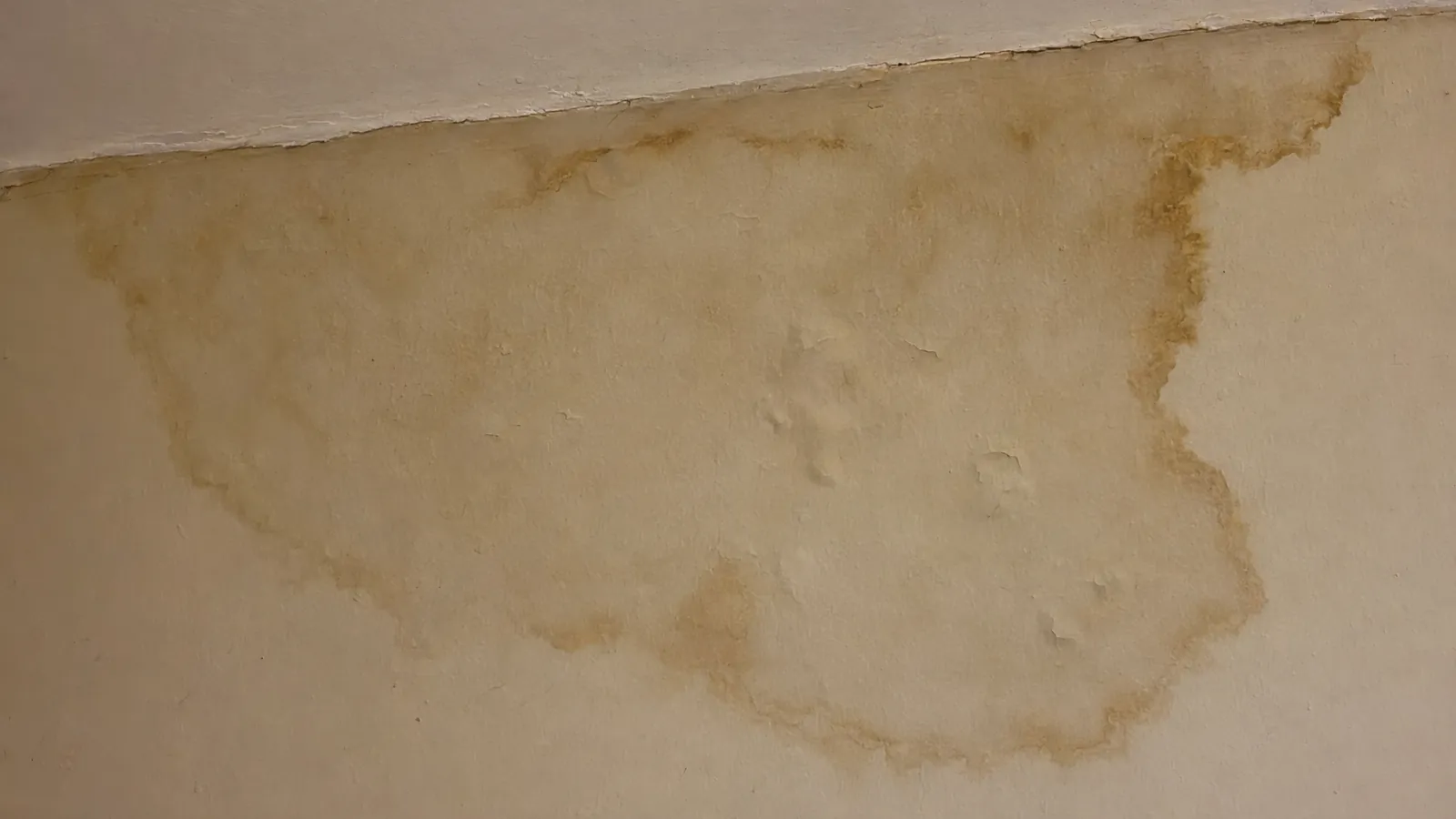
Leak rings and soggy patches beneath bathrooms, removed to solid board and refinished.
Repairing a water-stained ceilingLeak rings below the bathroom, holes in flat walls, joints and fasteners showing through. Mended, blended wide and primed for your painter.
After the call, a nearby drywall pro rings back to hear about the damage and price it.
Call 7 days, 7am–9pm
When your note arrives, a drywall pro close to you rings to discuss the damage and a figure.
Five plain stages. Most of the waiting is for compound to cure. The page on how requests are handled has more.
Ring us, or message a photo taken from a step back. Say which room. That is plenty to begin.
Someone who does drywall around here phones you, asks a few things and names a figure. No work begins without your yes.
Where water did the damage, the plumbing gets put right and the gypsum has to test dry. Damp gypsum is not painted over.
Ruined board comes out to solid edges, fresh board is fastened in, joints are taped, and mud is built up in light layers.
A last pass with the sanding block, then primer. The room is handed back tidy and ready for color.
New Providence is a borough of about 3.7 square miles on the northwestern edge of Union County. Its 2020 headcount was 13,650.
Much of the town went up in a short window. Residents numbered 3,380 in 1950 and 10,243 by 1960.
Census Bureau estimates place 1,830 of the borough's 5,659 homes in the 1950s and 1,136 more in the 1960s. Just over half the housing, then, from two decades.
Nearly two in three homes are detached single-family houses. Another 684 are in buildings with fifty or more units.
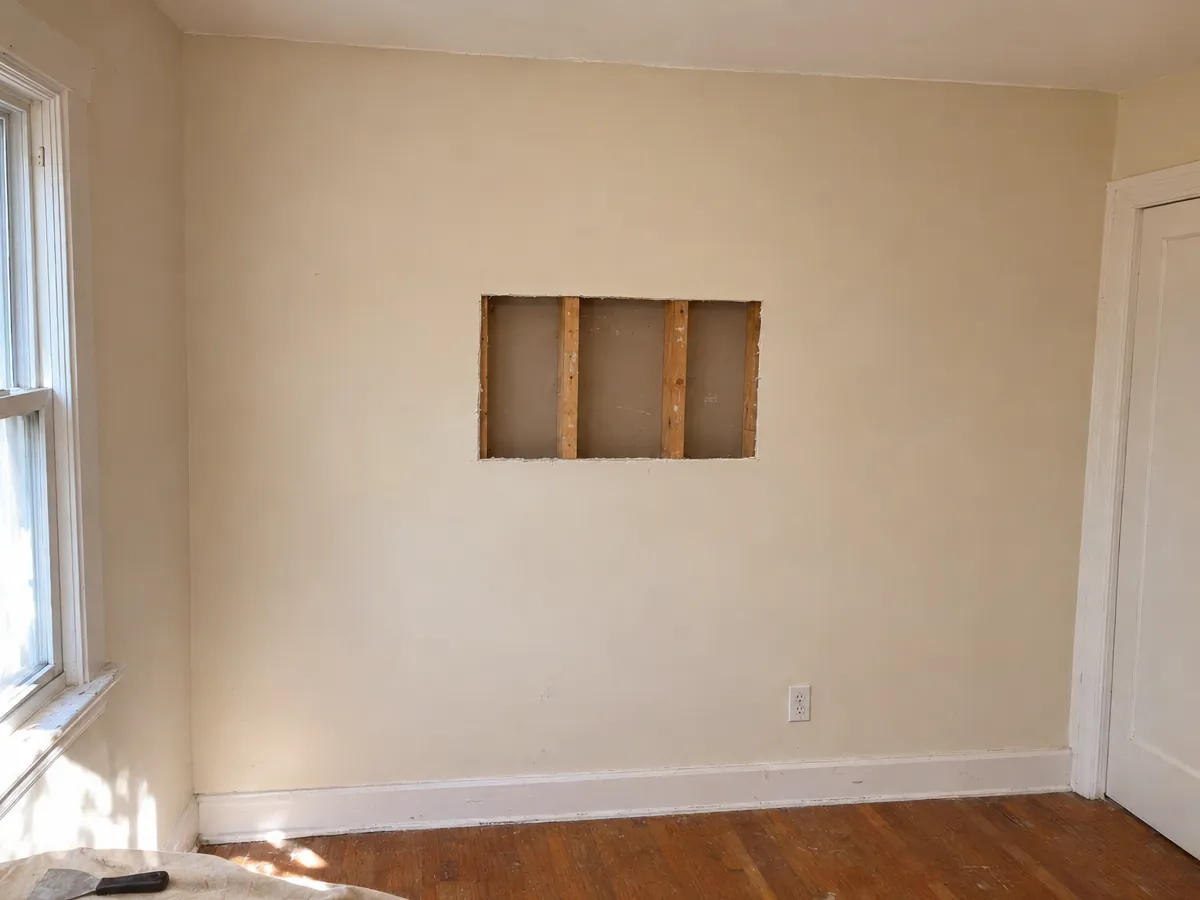
Walls of that vintage carry seventy-odd winters of settling, plus the odd leak, rewire and remodel. Some houses of that age have plaster on gypsum lath rather than paper-faced drywall, so step one on an older wall is finding out which.
In a two-story house, the upstairs bath often sits right over a kitchen or living room. A slow seep at a tub drain or toilet seal tends to announce itself as a ring downstairs.
Three kinds of repair, each with its own page.
Leak rings and soggy patches beneath bathrooms, removed to solid board and refinished.
Repairing a water-stained ceilingHoles, dents and gouges in flat walls, patched and feathered until the edge fades.
Patching holes in smooth wallsRaised tape lines, cracked joints and little domes over screws, reset and smoothed.
Fixing seam lines and popped screwsReal estate photos are unkind to drywall. A flash or a low sun picks out each patch edge and each raised screw.
Begin with what a buyer or inspector spots first. A leak ring overhead invites questions about plumbing, so it heads the list.
Holes behind doors and dents in hallways come next. They are small, but they read as wear.
Skip the pinholes you plan to paint over. Picture-hook holes usually get filled during the paint job itself.
Put drywall ahead of paint on the calendar. Mud and primer must be finished and dry before a painter can start.
If a stain came from a plumbing problem that has since been sorted out, file the plumber's invoice with the house papers. It answers the obvious question.
Leaving a rental? A neat patch over a row of popped screws, or a doorknob hole, is simple to arrange before the walk-through.
Most interior walls are gypsum board: a chalky core in a paper skin, fastened to wood framing. Studs and joists usually stand sixteen inches apart.
Ceilings under bathrooms are usually the same board, fastened up into the joists.
Walls are most often hung with half-inch sheets. An older wall can measure a little different, so a patch is shimmed or trimmed until its face lines up with its neighbors.
Joint compound comes in two kinds. Setting-type mud cures through a chemical reaction and suits first coats and deep fills. Lightweight topping sands easily and goes on last.
Untextured walls are the toughest to blend. Nothing disguises an edge, so mud is spread far beyond the repair and sanded flat.
Where a ceiling carries a light texture, a small test area comes first, to get the pattern right before the patch.
Nail holes, popped screws, dents and short cracks.
Filled, sanded and primed. Two or three skins of mud, each one cured first.
Doorknob holes, up to about the width of a hand span.
A backed patch or a paper-flanged one, then tape and three coats. More curing, more sanding.
A leak-ruined ceiling section, or a wall opened to its framing.
Old board out to the framing, new board fastened in, joints taped, coats built and sanded. Texture and primer last. Curing usually stretches it past one day.
For rough orientation: Inch Calculator, a national pricing site (updated October 2023), lists about $60 to $200 for a small drywall fix, and about $300 to $900 for one big repair or a cluster of little ones.
Nationwide averages like these are not a New Providence price. A real figure turns on size, ceiling height, texture, coat count and whether the job ends at primer or at paint.
Centered on the borough, Murray Hill included. Beyond it:
A few lines on each place sit on the nearby towns page.
Three ways to handle damaged gypsum. Which fits comes down to how much surface is hurt.
| Patch | Replace a section | Skim coat | |
|---|---|---|---|
| Best for | Holes, dents and pops in otherwise sound board | Board that is wet, soft, crumbling or sagging | A wall with many small flaws or a rough surface |
| What changes | Only the damaged spot | A piece removed out to studs or joists | The whole face gets a thin new layer |
| Coats and curing | Two or three light coats | Tape plus three coats, more curing | Two or more full-wall coats |
| Dust and mess | Little, kept to one spot | More: cutting and sanding a wider area | The most sanding of the three |
| Paint afterward | Prime and touch up, or repaint the wall | Prime and repaint the wall or ceiling | Prime, then a full coat on that wall |
Unsure which fits? A photo tends to decide it. Patching is covered on the smooth-wall patching page, and cut-out sections on the page about water-stained ceilings.
Ring, or message a photo of the damage. A line or two is enough to begin.
You hear the figure, and what the work involves, before anything starts.